How Clamp Insert Design Changes with Butt Fusion Machine Size
- Share
- publisher
- RUBR
- Issue Time
- Sep 17,2026
Summary
This article explains why clamp insert design changes as butt fusion machine size increases, including differences in contact area, clamping stability, one-piece structures, widened inserts, and aluminum clamp design for large HDPE pipe welding.
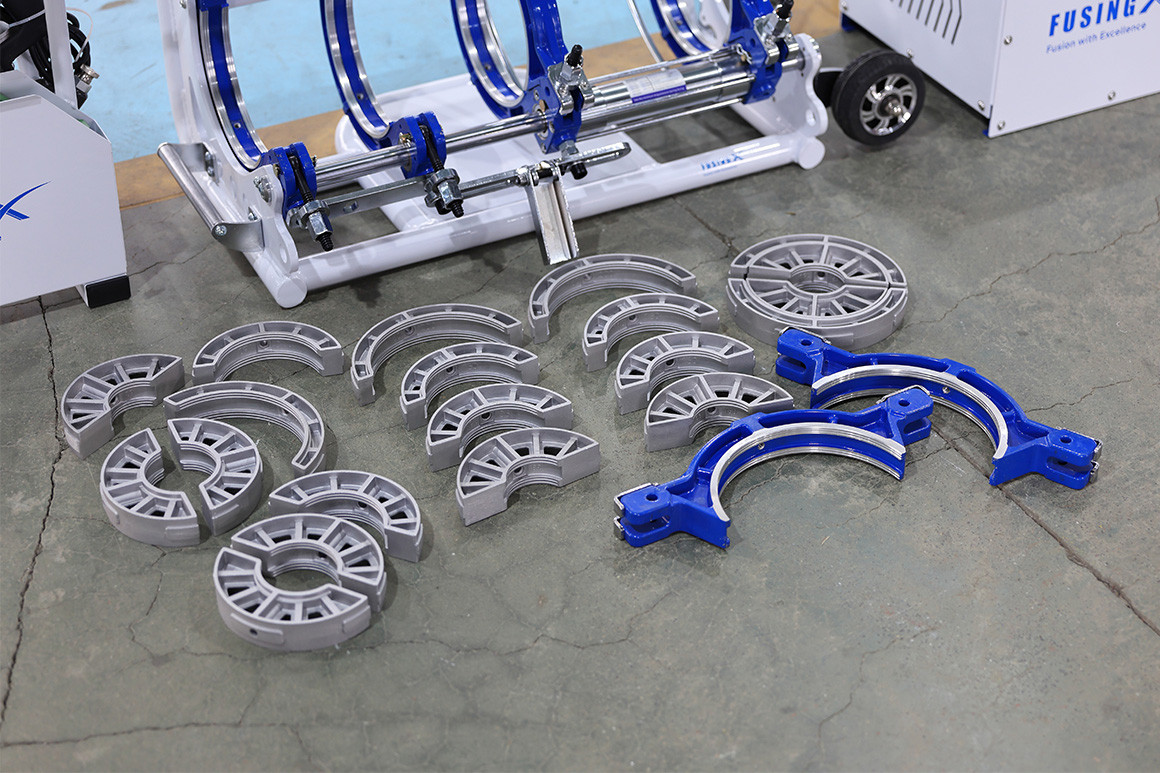
Clamp inserts may look like a simple part of an HDPE butt fusion machine, but their role is important: they hold the pipe securely and help keep both pipe ends properly aligned.
As pipe diameter increases, however, the working conditions change significantly. The pipe becomes heavier, the clamping area becomes larger, and the load during facing increases. As a result, the size, width, structure, and installation method of clamp inserts often need to change as well.
On smaller and medium-sized machines, clamp design usually focuses more on easy installation and quick pipe-size changes. On larger machines, contact area, clamping stability, and structural strength become increasingly important.
In other words, clamp insert design changes because the demands of the application change with pipe size.
Why Simpler Clamp Inserts Work Well on Smaller Machines
For small and medium-sized HDPE pipes, the clamp inserts themselves are relatively compact and lightweight.
As long as sufficient clamping force can be maintained, reducing the number of insert pieces can make the whole setup simpler.
With fewer pieces to install, operators can change between pipe sizes more quickly without repeatedly assembling several layers of inserts.
This can be especially useful on jobsites where multiple pipe sizes are handled during the same project.
Typical benefits include:
· Fewer insert pieces
· Faster installation and removal
· Easier pipe-size changes
· Fewer assembly steps
What Changes as Pipe Diameter Increases?
As pipe diameter increases, pipe weight rises quickly.
During facing, heating, and fusion, the clamp system must not only hold the pipe in position but also minimize movement and help maintain proper alignment between the pipe ends.
At this point, clamp design needs to consider more than installation convenience.
Important factors include:
· Contact area between the clamp and pipe
· Distribution of clamping force
· Structural rigidity of the clamp
· Pipe stability during facing
· Ease of handling and installation
For this reason, clamps on large-diameter butt fusion machines are usually wider and more substantial than those used on smaller machines.
Why Does Contact Area Matter?
The contact area between the clamp insert and the pipe is an important part of stable clamping.
On smaller pipe sizes, a standard-width clamp can usually provide sufficient support.
As pipe diameter and weight increase, however, a relatively narrow clamping surface may provide less support during high-load operations such as facing.
Increasing clamp width creates a larger effective contact area with the pipe surface.
A larger contact area can help:
· Improve pipe stability
· Distribute clamping force more evenly
· Reduce pipe movement during facing
· Support better alignment between pipe ends
This is one of the clearest differences between clamp design on smaller machines and large-diameter butt fusion equipment.
TitleIs One-Piece Always Better Than Multi-Piece?
Not necessarily.
Different clamp structures are designed to solve different practical problems.
On small and medium-sized machines, fewer insert pieces can make installation faster and pipe-size changes easier.
On large machines, the design must balance several other factors, including contact area, structural strength, individual component weight, and ease of handling.
For this reason, clamp quality should not be judged simply by whether the design is one-piece or multi-piece.
The better question is whether the clamp structure is suitable for the size of the machine and the working conditions it is designed for.
A good clamp design should change as the application changes rather than forcing the same structure across every machine size.
Why Are Aluminum Clamp Inserts Widely Used?
Clamp inserts need sufficient strength, but weight is also an important consideration.
Aluminum offers a useful balance between structural strength and manageable weight.
Because clamp inserts often need to be installed, removed, and changed between pipe sizes, reducing the weight of each component can make operation considerably easier.
This becomes even more important on larger machines, where oversized inserts can otherwise become difficult to handle manually.
For this reason, aluminum clamp inserts are widely used on many hydraulic butt fusion machines.
A Practical Example from the FusingX FX Series
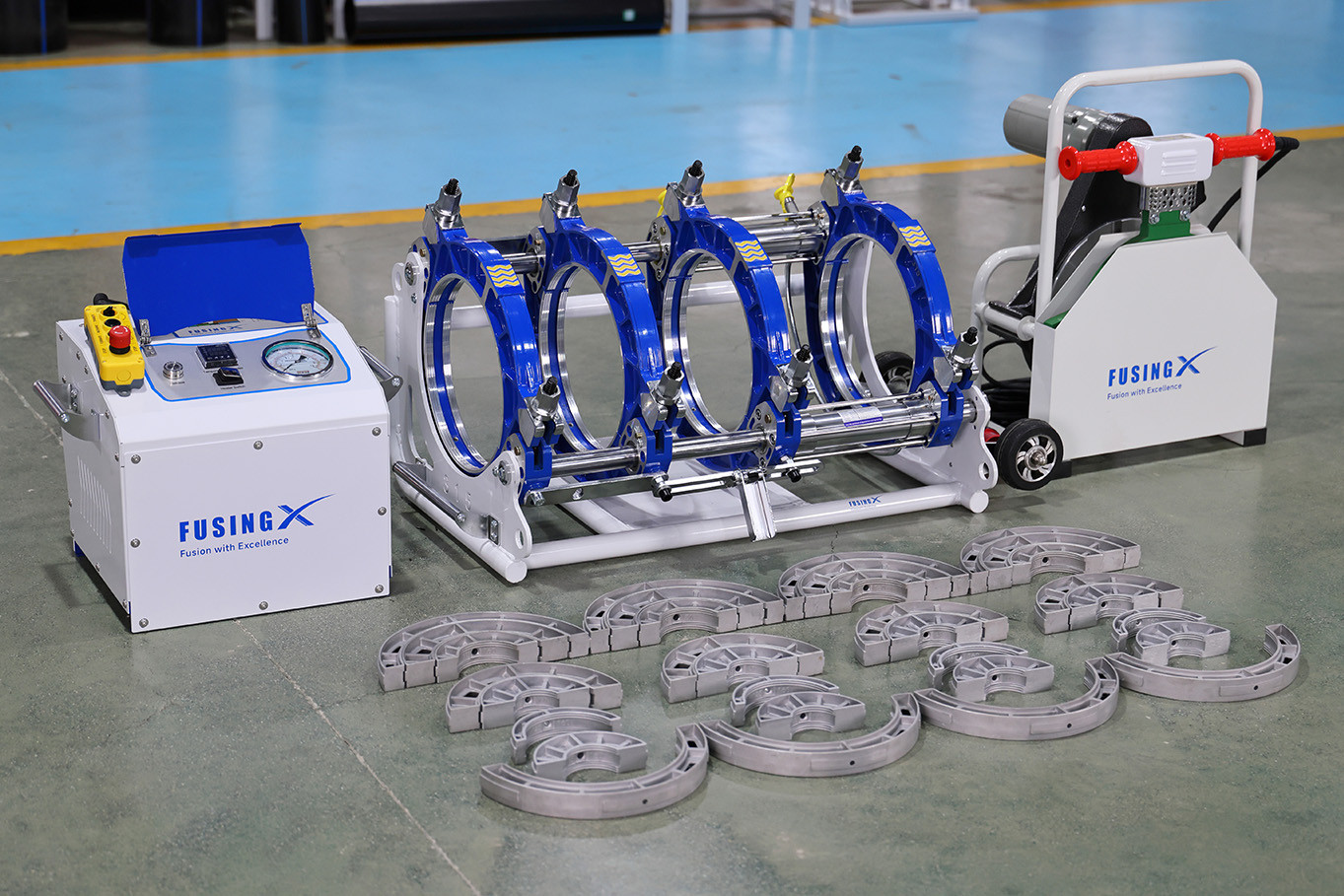
The FusingX FX Series uses different clamp designs according to machine size and operating requirements.
FX models up to 355 mm use one-piece aluminum clamp inserts, with the main goal of reducing the number of insert pieces and making pipe-size changes more straightforward.
As machine size increases, the design places greater emphasis on contact area and clamping stability.
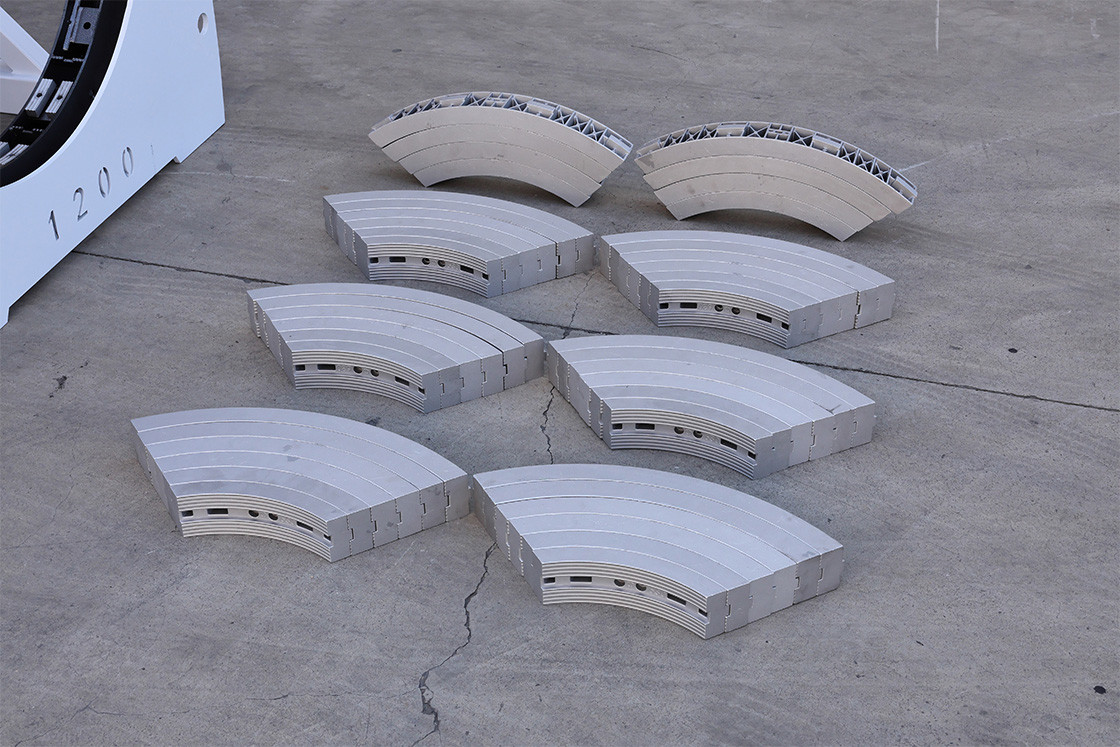
FX1000 and FX1200 machines use widened aluminum clamp inserts to increase the effective contact area between the clamp and large-diameter pipe.
This wider structure provides more support for heavy pipe and helps improve stability during facing and alignment.
All currently produced FX models use aluminum clamp inserts.
For FX machines above 1400 mm, configurations are available on a customized project basis. Clamp structure can therefore be designed according to pipe size, machine specification, and specific project requirements.
Clamp Design Is Worth Checking When Choosing a Butt Fusion Machine
When evaluating a butt fusion machine, buyers often focus first on welding range, hydraulic system, heating plate, and facer.
Clamp design is also worth paying attention to.
This is especially true for large-diameter HDPE pipe, where contact area, ease of installation, and clamping stability can directly affect facing, alignment, and overall operating convenience.
As machine size increases, a well-designed clamping system must balance four main factors:
ease of operation, contact area, clamping stability, and structural strength.
What looks like a small design detail can make a noticeable difference in day-to-day use.