FX250: What Actually Defines a High-End Butt Fusion Machine
- Share
- publisher
- RUBR
- Issue Time
- Apr 15,2026
Summary
The FX250 highlights what truly defines a high-end butt fusion machine. Rather than focusing on appearance, it improves stability and control in key stages such as facing, heating, and welding. With an upgraded hydraulic system, remote operation, and a thicker heating plate, it delivers more consistent performance in everyday 63–250mm pipe welding applications.
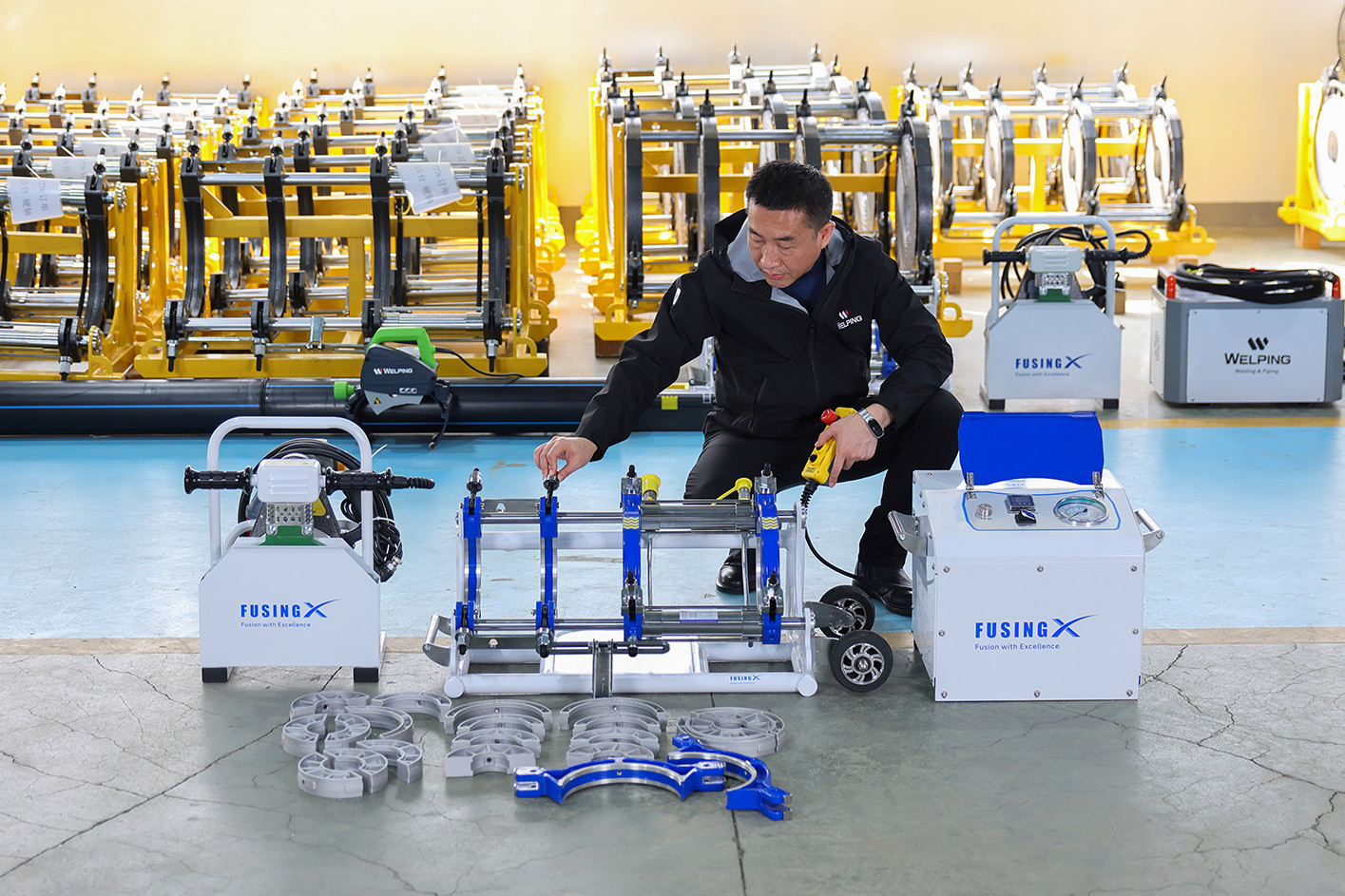
When choosing a butt fusion machine, the term “high-end” comes up quite often.
In many cases, it tends to be associated with appearance or the number of features.
But in real use, the difference usually shows up somewhere else.
It comes down to how stable and controllable the machine is during the key steps.
This becomes especially noticeable in the 63–250mm range.
Machines in this size are used frequently, often under changing conditions.
They may not look “heavy-duty,” but they are actually more sensitive to how well everything works together.
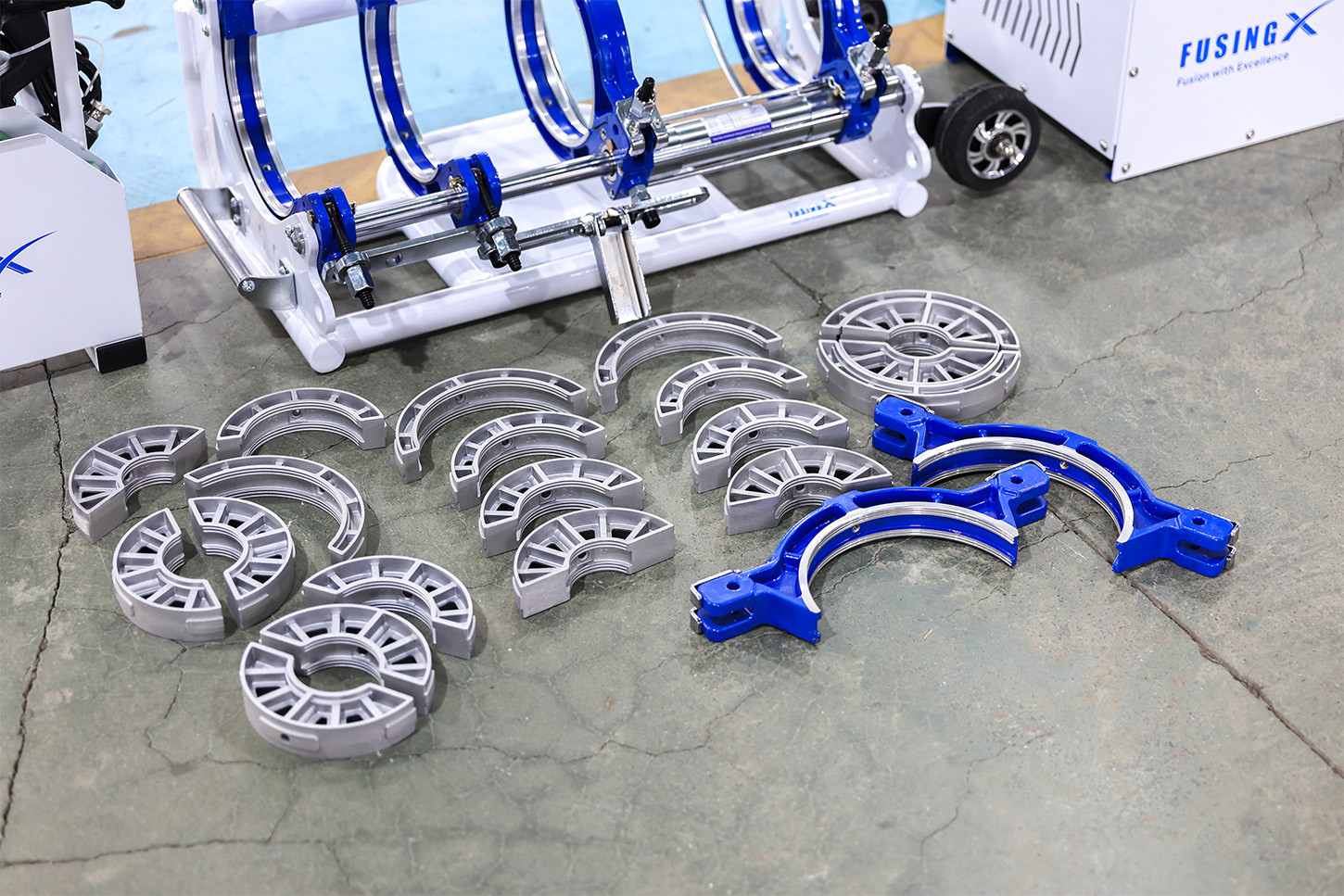
Taking the FX250 as an example, the approach is relatively straightforward.
Instead of adding complexity, the focus is on making the critical parts of the process more stable.
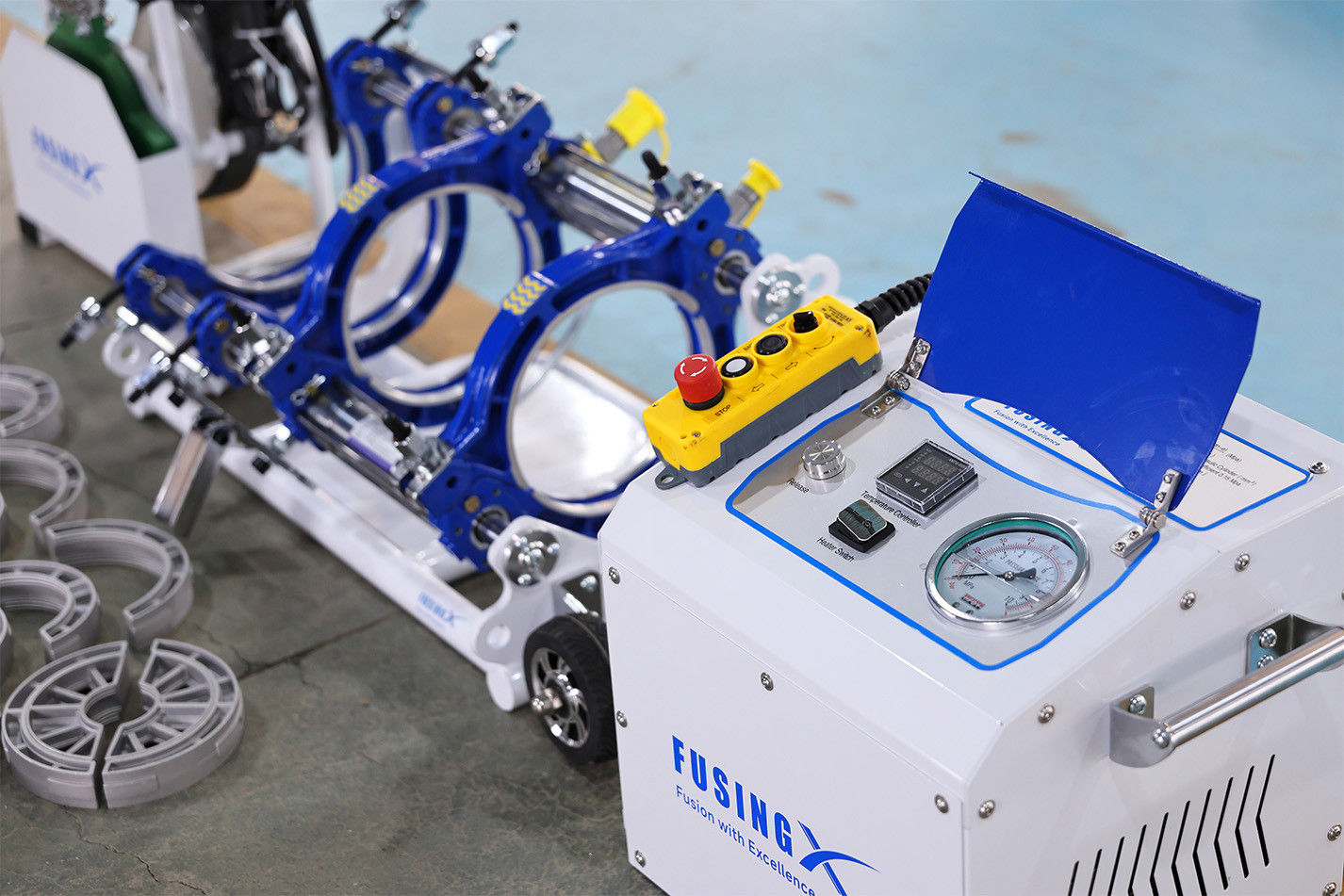
The hydraulic unit is probably the least visible part, but also the most important.
From facing to final welding pressure, almost every action depends on it.
How stable the pressure is, and how precisely it can be controlled, directly affects both the process and the result.
The FX series uses an upgraded hydraulic system, combined with an imported motor.
In practice, this leads to smoother pressure output and finer control.
This difference becomes more noticeable during facing.
Facing is not just about removing material — it requires a steady and well-controlled feed.
When the pressure is consistent, the process feels more natural, and the pipe ends come out more uniform.
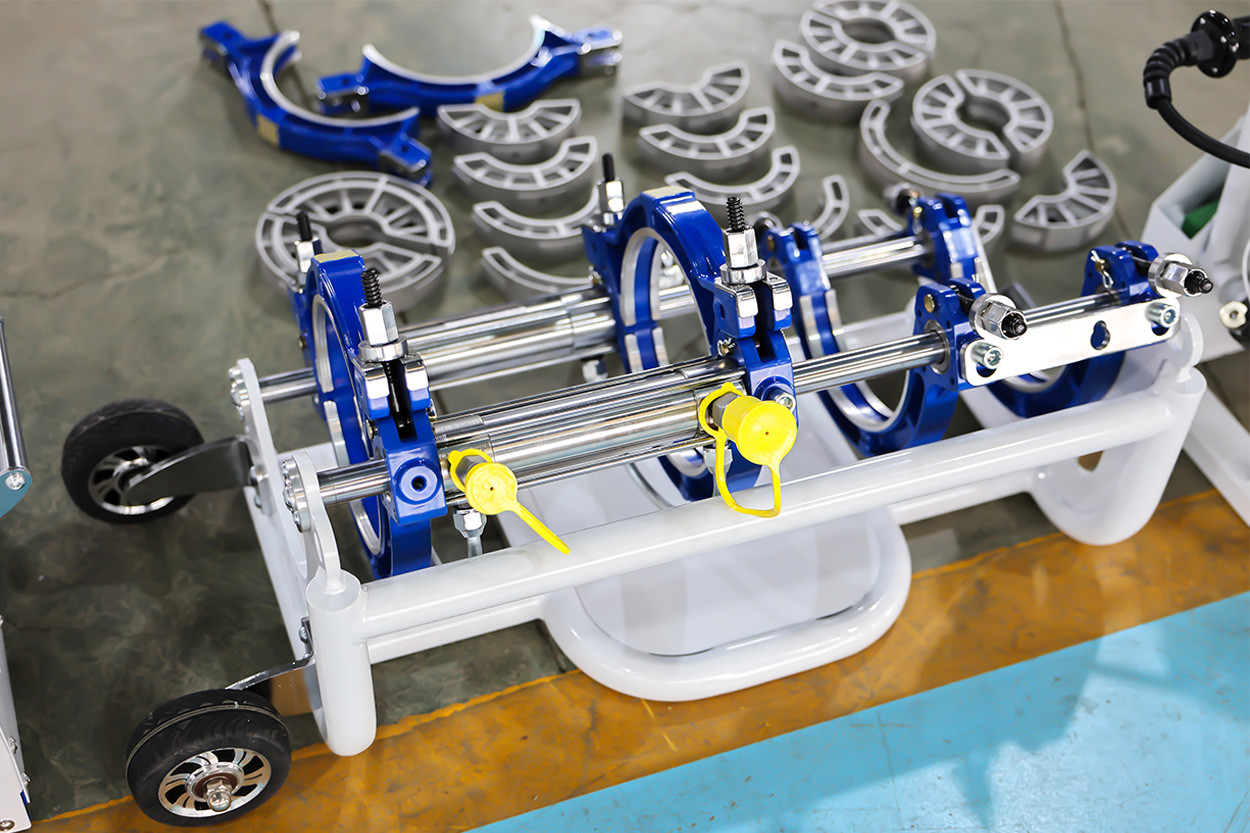
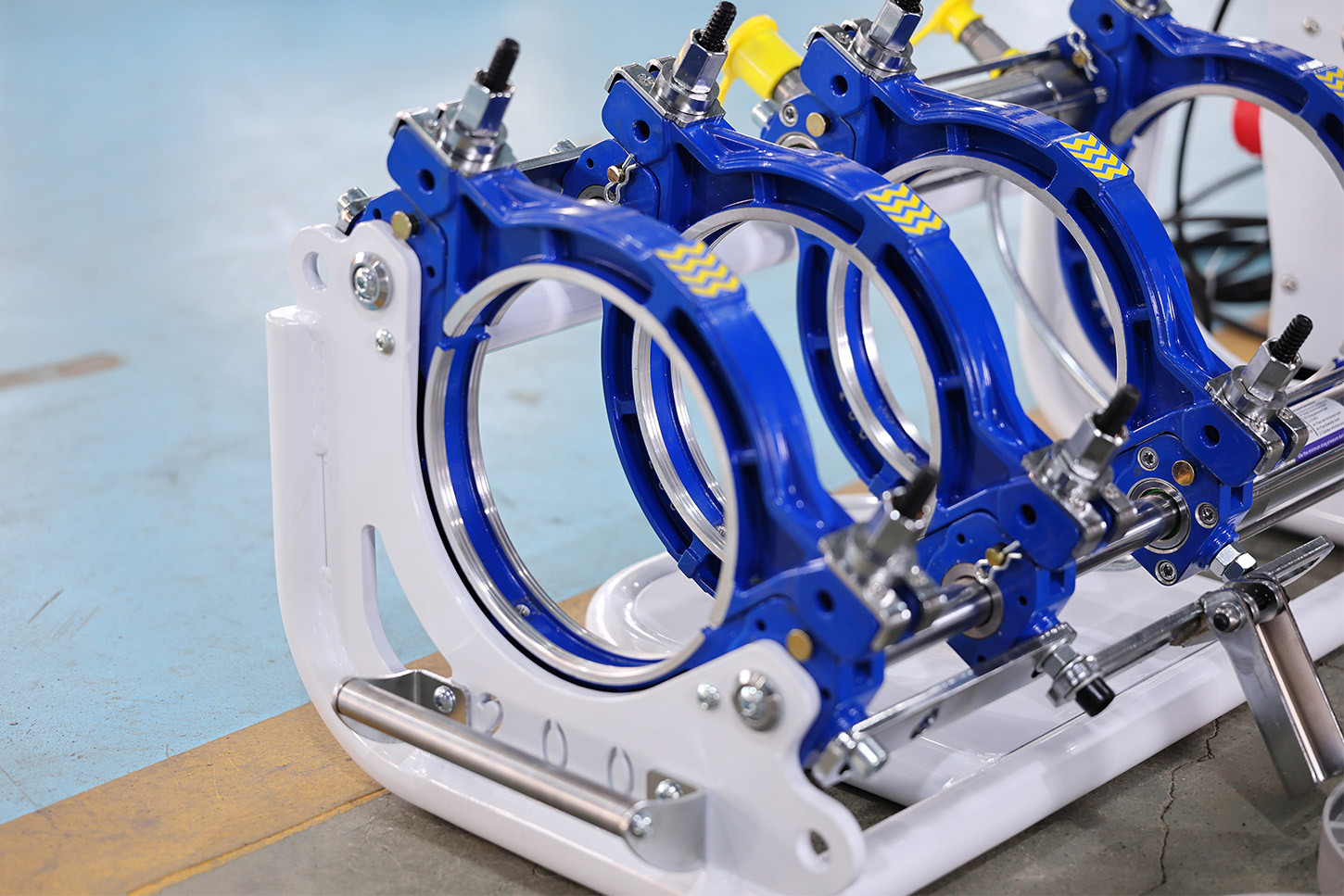
The way the machine is operated has also changed.
The new hydraulic unit is equipped with a remote control.
But the real difference is not just the remote itself — it’s how the operator interacts with the machine.
Instead of standing next to the hydraulic unit, the operator can stay by the frame,
watching the pipe ends while controlling the process at the same time.
Whether it’s facing, heating, or welding, this “see and control” approach makes the operation more direct.
It also makes small adjustments easier to handle.
Heating is another part that looks simple but plays a key role.
The FX series comes standard with a green heating plate, which is thicker than typical ones.
This results in better thermal stability.
Temperature differences are reduced, and heat distribution becomes more even.
In practice, this contributes to more consistent welding results.
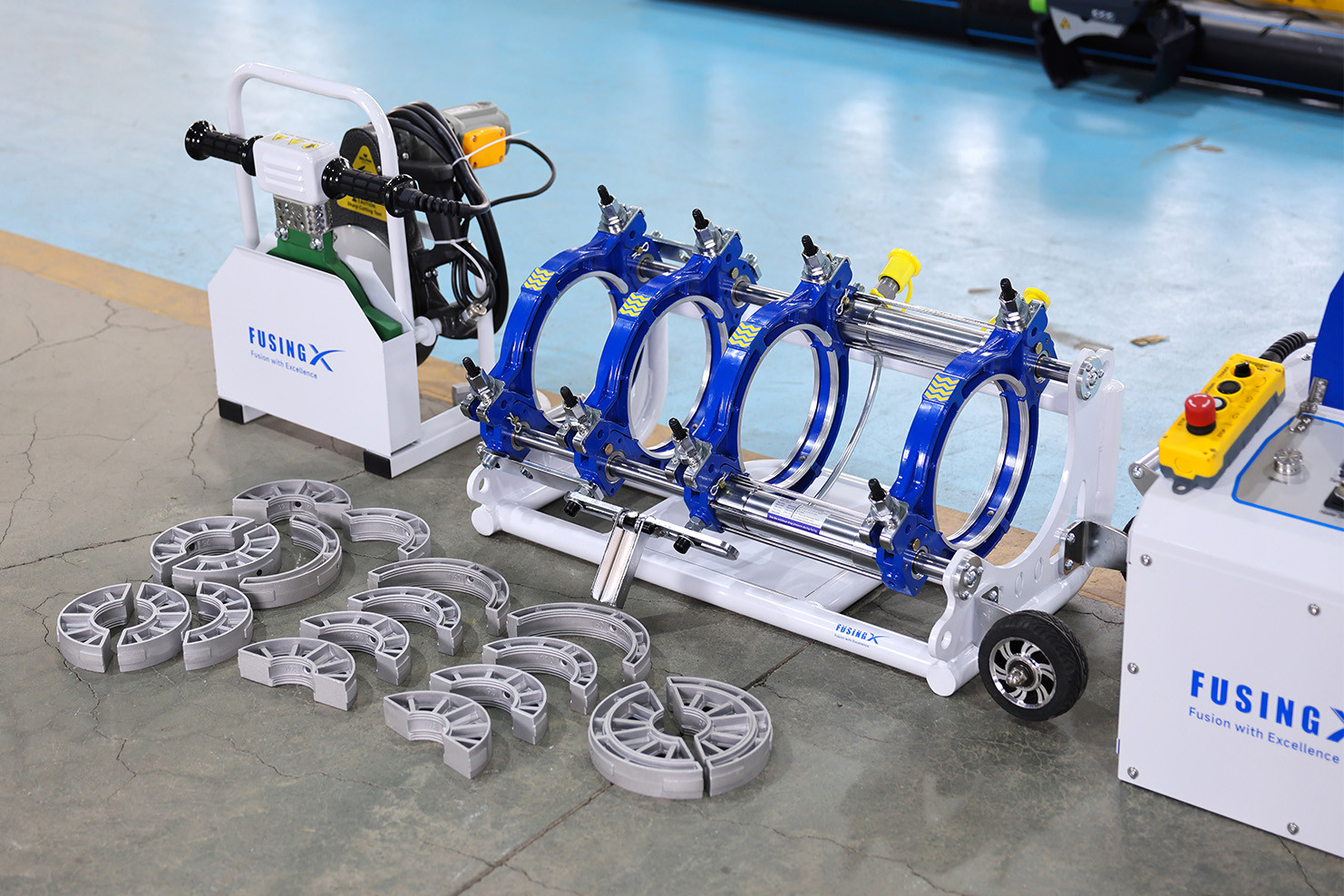
As for the overall design, it’s worth a brief mention.
The FX machines have a relatively consistent look, with all components fitting together in a clear and organized way.
The layout feels balanced, without unnecessary complexity.
These details may not stand out at first glance, but they make a difference over time.
Coming back to the idea of “high-end,” it can actually be understood quite simply.
It’s not about how many features are added, or how complex the machine looks.
It’s about whether the key steps remain stable and controllable throughout the process.
In that sense, the FX250 focuses on getting the fundamentals right.